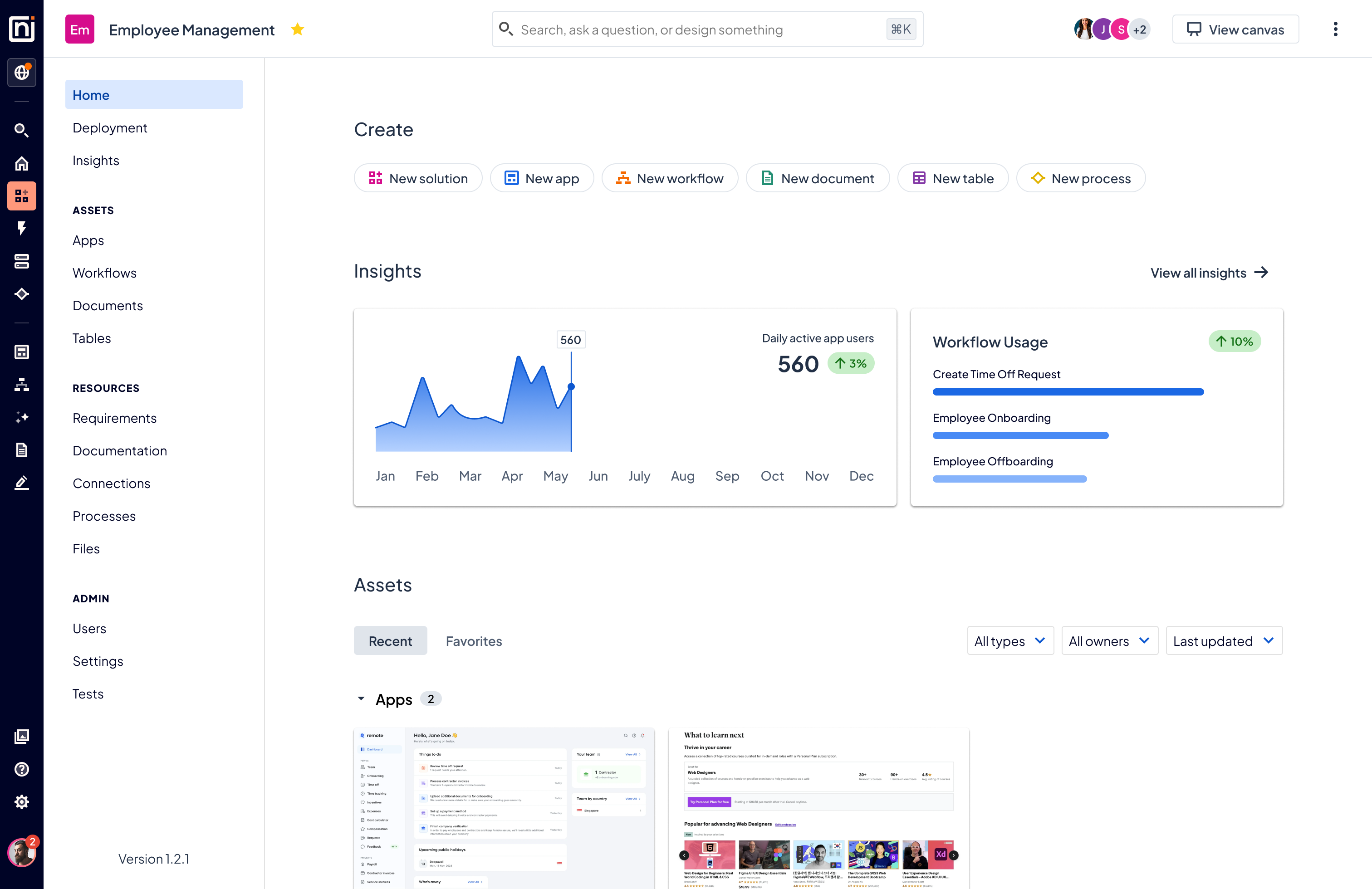
Leading cross-functional strategy to modernize enterprise process management while protecting existing revenue
Skip to all visuals
The real challenge wasn't just modernizing the UI — it was transforming a siloed product into an integrated platform capability without losing existing customers or revenue, while opening new market opportunities.
Process Manager was a powerful standalone product for documenting and managing business processes, but it was increasingly misaligned with our company's unified platform strategy. Users complained it looked outdated, was hard to navigate, and had slow loading speeds.
Valuable process data — roles, locations, ownership, procedures — locked inside an isolated tool.
Business context flows up through the platform — enabling AI that understands how your organization actually works.
The real opportunity wasn't a UI refresh — it was making Process Manager the business context engine the entire platform depends on.
"The most valuable transformations happen incrementally, through consistent partnership and evolved thinking."
Over 18 months, I evolved my thinking alongside our Lead PM from surface-level modernization to deep strategic transformation. Rather than focusing on easier-to-build features like dashboards, we identified that editing and visualizing processes was the core functionality that would differentiate us in the market.
Key insight: Process documentation isn't just about compliance — it's the business context that makes AI solutions truly valuable across our entire platform.
Persona research revealed that Ana (Administrator) serves as connective tissue between Line of Business users and technical users — a role we had previously undervalued. I worked closely with our Research team to evangelize this finding and make it the foundation of our strategic prioritization.
Rather than a big-bang redesign that could alienate existing customers, I developed a phased approach that protects existing ARR while growing new revenue streams:
Each phase protects existing ARR while opening the next revenue tier — no big-bang risk
I'm mentoring a mid-level designer through senior-level work that directly feeds her promotion this year. Rather than designing the solution myself, I'm directing her to:
With 1.5 FTE designers, I've divided their work to balance immediate delivery needs with long-term strategic vision — breaking down the 18-month strategic picture into deliverable chunks, in close coordination with PM and Engineering.
What this project taught me about strategic leadership: The most valuable transformations happen incrementally, through consistent partnership and evolved thinking.
My approach to team development: Rather than doing the work myself, I'm using this complex project to elevate my team member's capabilities. Her success on senior-level strategic work directly supports her promotion while building our team's capacity for future challenges.
The power of research integration: The persona insights weren't just user research — they became our strategic foundation for connecting siloed platform capabilities. Great design leadership means recognizing when research reveals business strategy, not just user needs.
Design completed under my coaching and direction by a Mid-Level Designer who was promoted to Senior Designer, using Platform elements designed by the Design System team.
Platform integration: Process Manager as part of unified solution architecture
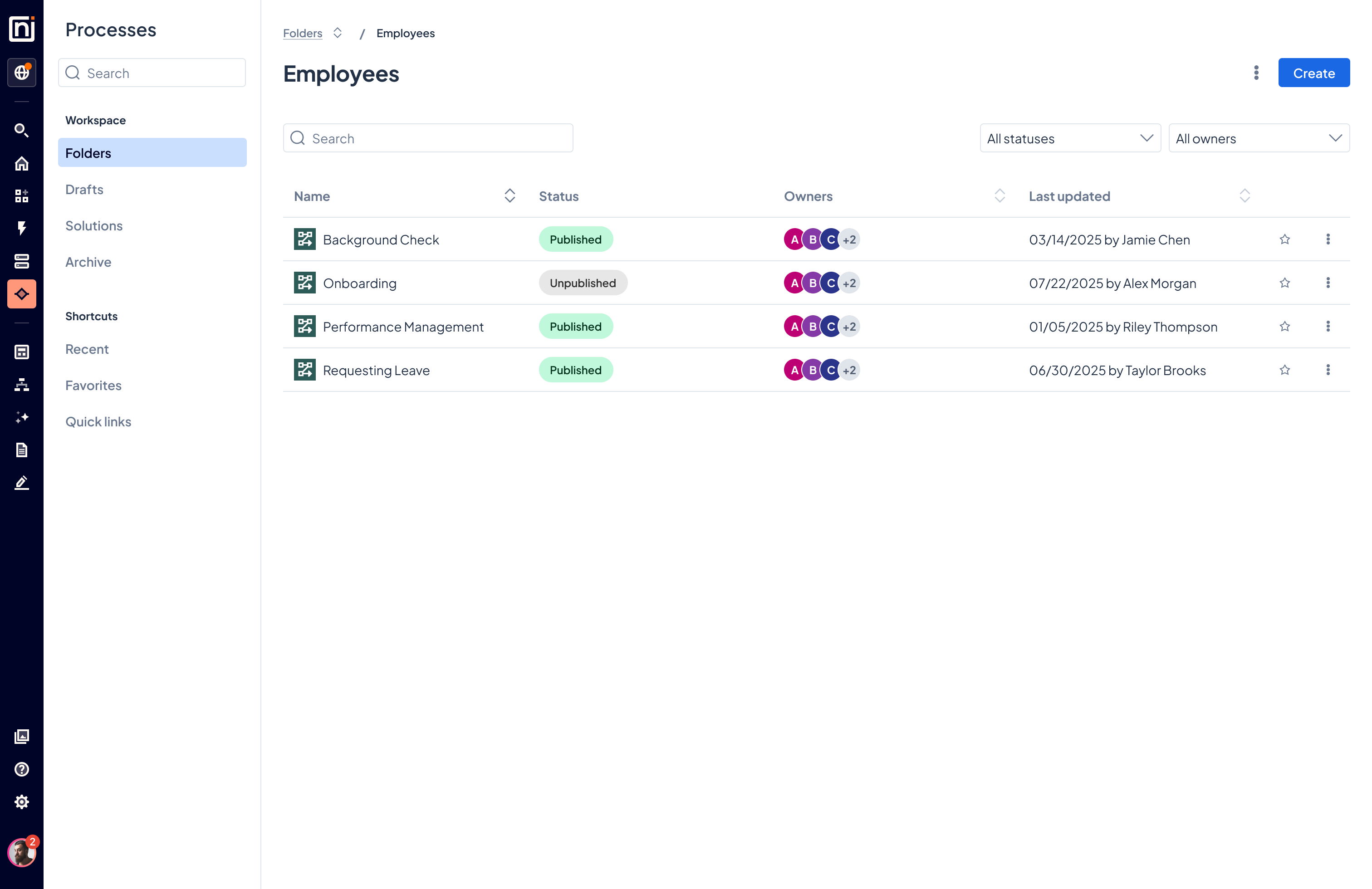
Modernized folder structure with clear status indicators and ownership visibility
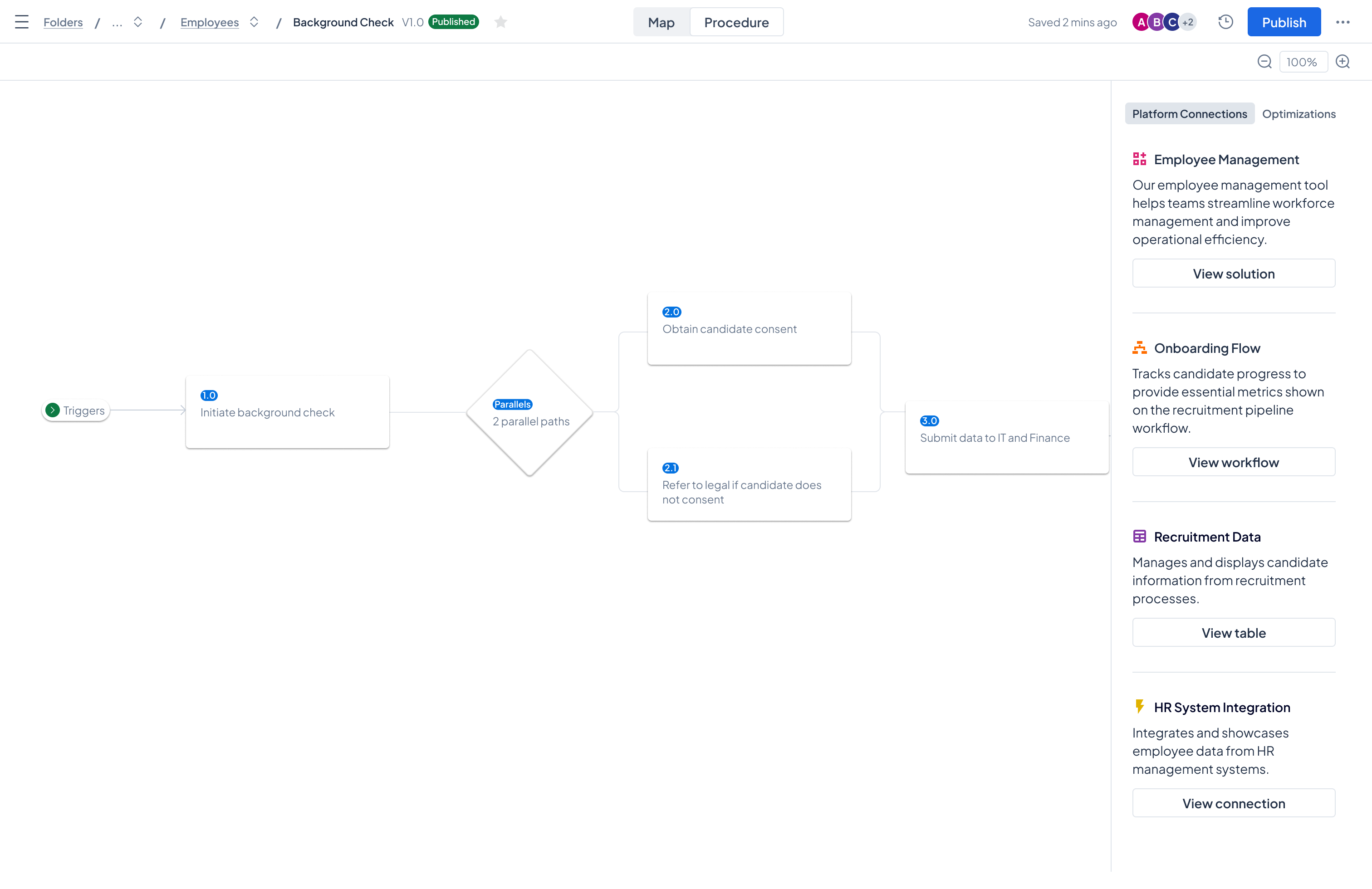
Map view concept: visualizing process flows for better understanding of complex workflows
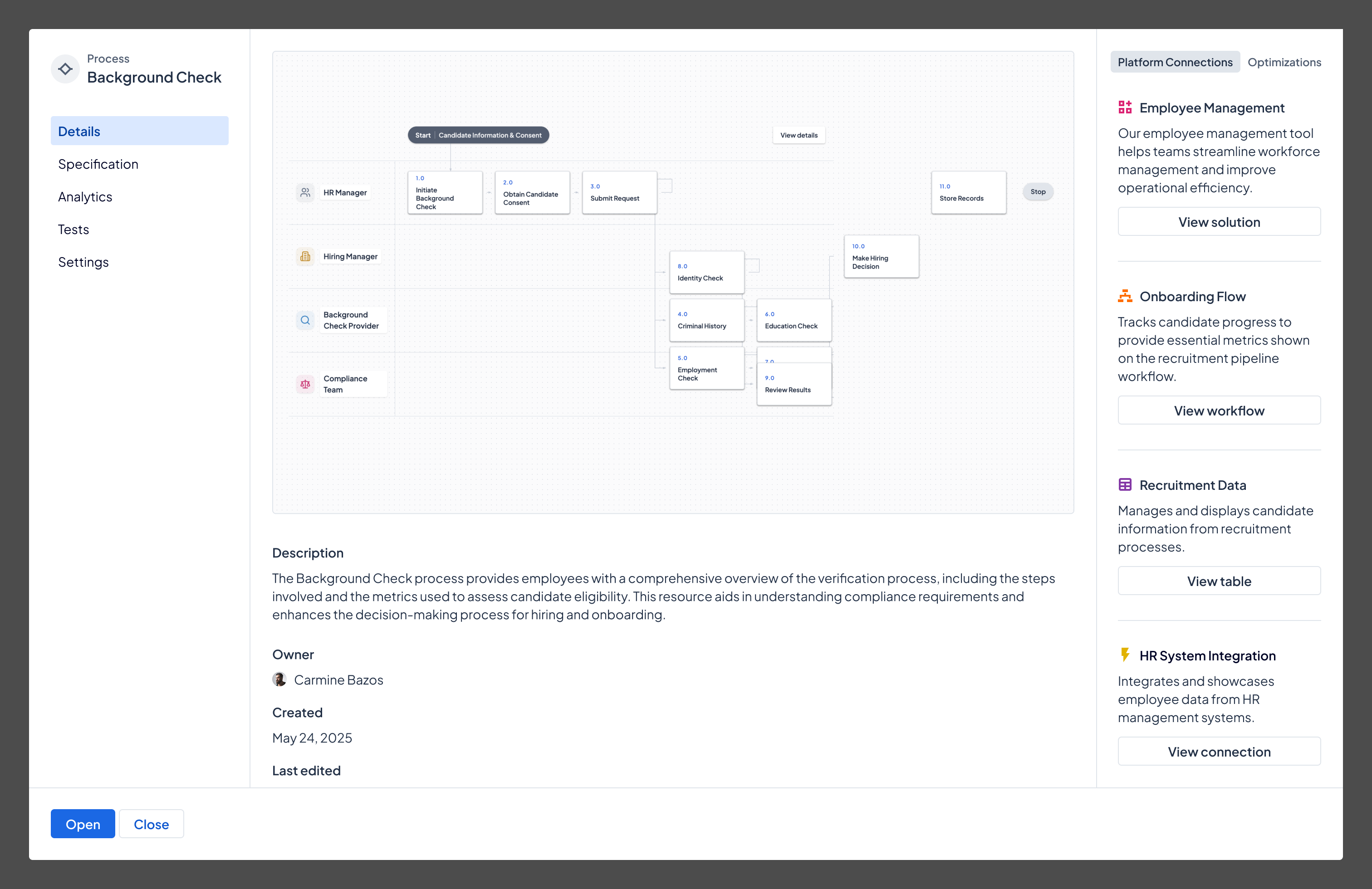
Integrated detail view: combining traditional process information with visual flow representation
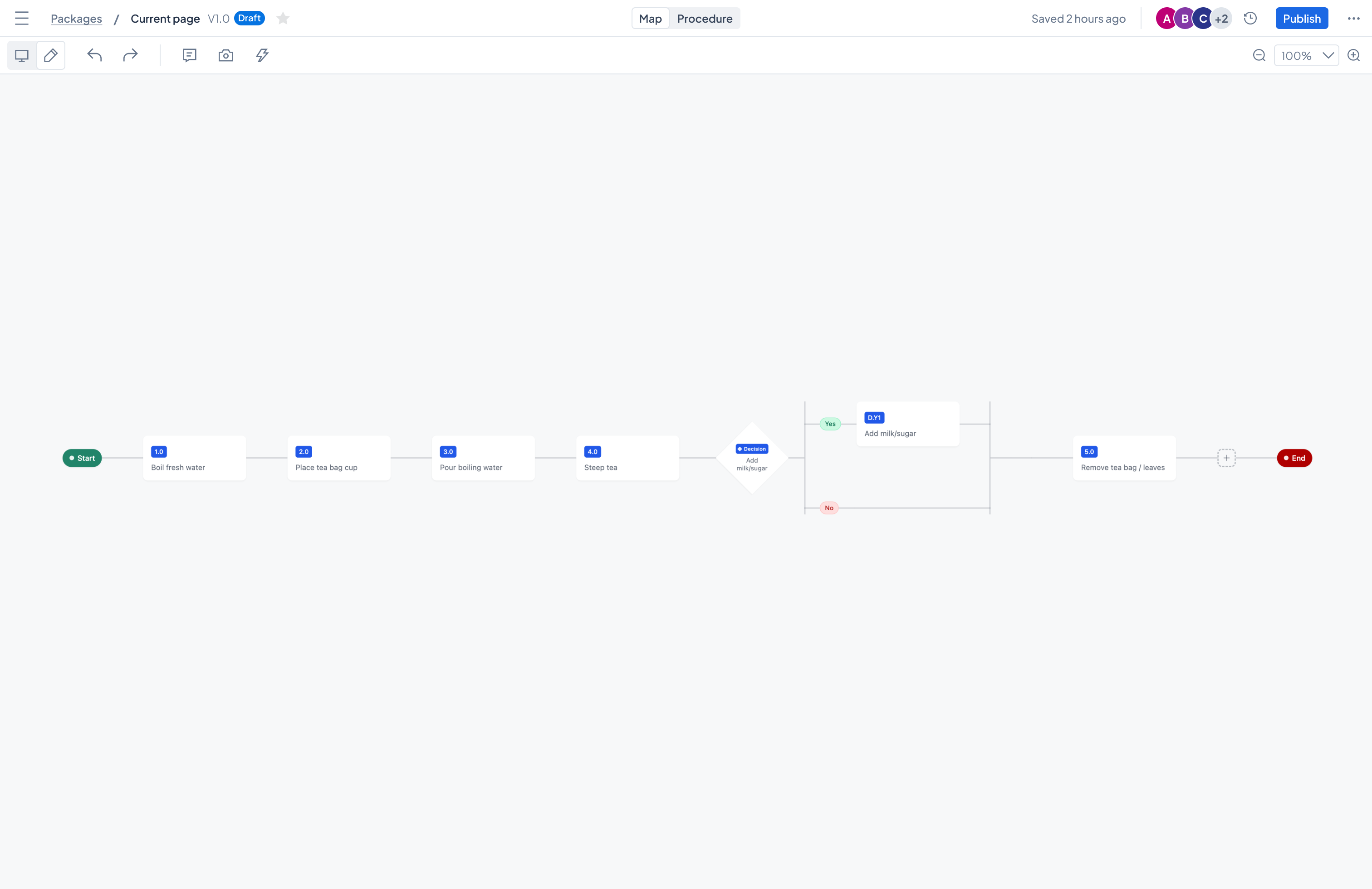
Strategic pivot: simplified map view showing linear workflow progression for initial release